Syntonic Phototherapy
Syntonic phototherapy uses specific colors, frequencies, and wavelengths of light directed into the eyes. As a result, it stimulates the brain and balances the body’s regulatory centers, improving vision, mood, energy, and overall neurological function.
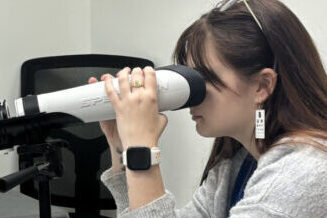
This non-invasive therapy, which has been used for over 80 years, helps with conditions such as lazy eye, focusing problems, stress, trauma, dysautonomia, and post-concussion symptoms. It does this by influencing the pineal gland and hypothalamus. By accessing these regulatory centers, the treatment restores balance in the body’s sympathetic and parasympathetic nervous systems.
Parasympathetic Nervous System
The parasympathetic nervous system (PNS) also known as the “rest and digest” system, controls homeostasis and activities that occur when the body is at rest. Its main function is to conserve energy, restoring the body to a state of calm so that it can relax and repair. Muscles relax, pupils constrict, the heart rate slows, food is digested and toxins are released when this system is functional.
Sympathetic Nervous System
The sympathetic nervous system (SNS) is responsible for the “fight or flight” response. When a threat is perceived, the body speeds up, tenses up and becomes more alert. For example, our pupils become dilated, muscles constrict to adapt for sudden movement, heart rate speeds up and adrenaline is released. It is important to note that the sympathetic nervous system kicks in automatically, and occurs in response to any perceived threat. Importantly, the threat does not have to be physical, which we rarely encounter today. Instead, ordinary daily stressors like work deadlines, multiple phone calls, a crying baby, or trying to multitask can trigger this same stress response.
Imbalance in these systems will mean that your body is subconsciously functioning 24/7 in the stressed stage. Without the systems working properly, your body isn’t getting enough needed rest and becomes dysfunctional.
Research has shown that certain frequencies of colored light will stimulate different aspects of the nervous system.
Information sourced from https://eyesoneyecare.com/resources/putting-a-spotlight-on-syntonic-light-therapy/)
- Higher energy or shorter wavelength colors like blue or violet stimulate the parasympathetic nervous system. These colors can help to reduce adrenaline production, which helps with anxiety and stress.
- Lower energy or longer wavelength colors like red and orange stimulate the sympathetic nervous system to improve fusion and binocularity. The theory behind this is that long wavelengths build an electrical charge within cell membranes and break through synaptic resistance to overcome binocular suppression.
- Wavelengths in the middle frequencies like green and yellow act as physiological stabilizers and detoxifiers for chronic or degenerative health issues.
Description of our syntonic phototherapy program:
- In-office testing and follow-up evaluations take place once every 4-6 weeks.
- Treatment is completed by wearing colorful goggles while outside or by natural light at home 5 days a week for 2-20 minutes in duration.
- Courses tend to take between 3 and 5 months depending on diagnosis and consistency of goggle-wear.
- The program is individualized based on our evaluation. This includes patient history, symptoms, vision diagnoses, functional visual field performance, pupil testing, and neuromuscular testing..
To schedule an evaluation with one of our providers or if you have questions about our program, please call us at (833) 882-8886.

We provide personalized care for a wide range of visual conditions that affect how you see, process, and interact with the world.
We offer a range of specialized treatments designed to improve visual function, strengthen the connection between the eyes and brain, and support overall quality of life.