Strabismus & Amblyopia Treatment
Strabismus and amblyopia affect how the eyes and brain work together. In many cases, these conditions begin in early childhood and impact visual development over time. Because of this, early identification and proper treatment of strabismus and amblyopia are essential. Without treatment, these issues can affect depth perception, learning, coordination, and overall visual comfort.
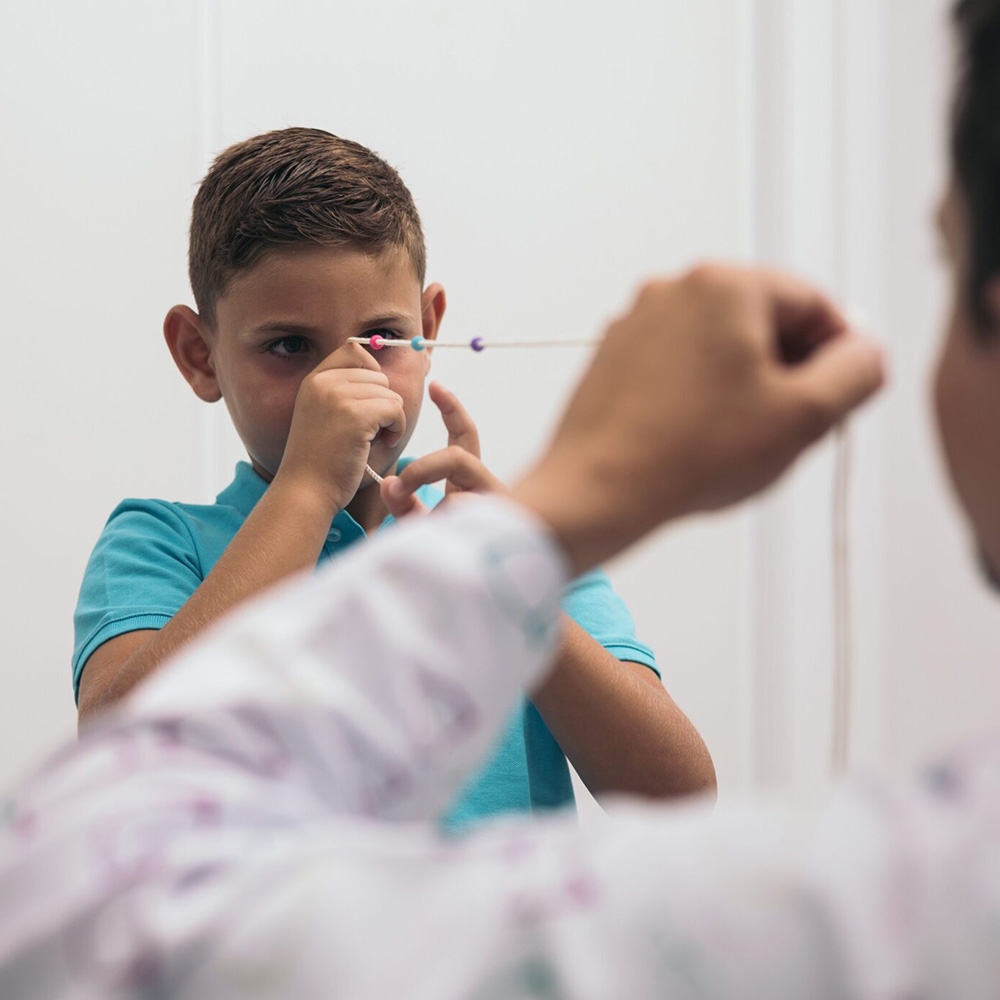
Strabismus
Strabismus is a condition that results in both eyes not pointing in the same direction. It can be present all the time or intermittently. Strabismus can result from eye muscle weakness. However, it is more commonly caused by a failure in the brain’s binocular vision system, which coordinates how the eyes work together. When this occurs, a child’s brain may begin to ignore (or suppress) input from one eye to prevent double vision or confusion. As a result, the eye may turn or drift, leading to strabismus. This results in impaired depth perception (stereo acuity) and a cascade of other problems affecting balance, gross and fine motor coordination and reading fluency.
Exotropia (outward turning of an eye), esotropia (inward turning of an eye), and Hyper/Hypotropia (upward/downward turning of an eye) can all be addressed through vision therapy and sometimes through prescribing of prism. Sometimes surgery is necessary, but for many patients we can make improvements to help them avoid surgery or improvements that will improve their outcome if surgery ends up needing to be necessary.
Amblyopia
Amblyopia is a treatable, neurodevelopmental form of vision loss. It is caused when there is a disruption in binocular vision in infancy/toddlerhood either by misalignment of the eyes (strabismic amblyopia), or when one eye has a greater farsightedness/nearsightedness and/or astigmatism than the other (refractive amblyopia). In most cases, it affects one eye, though it can occur in both eyes, even with glasses or contacts. While many providers recommend hours of patching each day, there are more effective treatment options available. We use specialized prescribing techniques and vision therapy to reduce suppression (the brain ignoring the weaker eye’s image). This improves binocularity (eye coordination) and reduces the degree of amblyopia present (better clarity).
To schedule an evaluation with one of our providers or if you have questions about our program, please call us at (833) 882-8886.

We provide personalized care for a wide range of visual conditions that affect how you see, process, and interact with the world.

We offer a range of specialized treatments designed to improve visual function, strengthen the connection between the eyes and brain, and support overall quality of life.